Body contouring and body sculpting are popular non-invasive cosmetic treatments that help refine your physique. While often confused, the difference between body contouring and body sculpting lies in their focus: contouring emphasizes fat reduction and skin tightening, while sculpting prioritizes muscle toning and definition. These procedures target stubborn areas like the abdomen, thighs, and arms that resist diet and exercise. With rising demand in 2026, understanding body contouring vs. body sculpting ensures you pick the best option for lasting results.
What Is Body Contouring?
Body contouring reshapes the body by removing excess fat and tightening loose skin. It suits those post-weight loss or after pregnancy, addressing sagging skin alongside fat pockets.
Common methods include:
- Cryolipolysis (like CoolSculpting)
- Ultrasound therapies
- Radiofrequency
Procedures can be non-surgical or surgical, such as tummy tucks or liposuction combined with skin excision. The goal is smoother, firmer contours over larger areas like the abdomen or flanks. Recovery varies, but non-invasive options allow quick return to daily activities.
What Is Body Sculpting?
Body sculpting focuses on enhancing muscle tone and definition by reducing fat in targeted spots. It uses technologies like EMSculpt or CoolTone, which induce muscle contractions to build strength while melting fat. This creates a sculpted, athletic look without surgery.
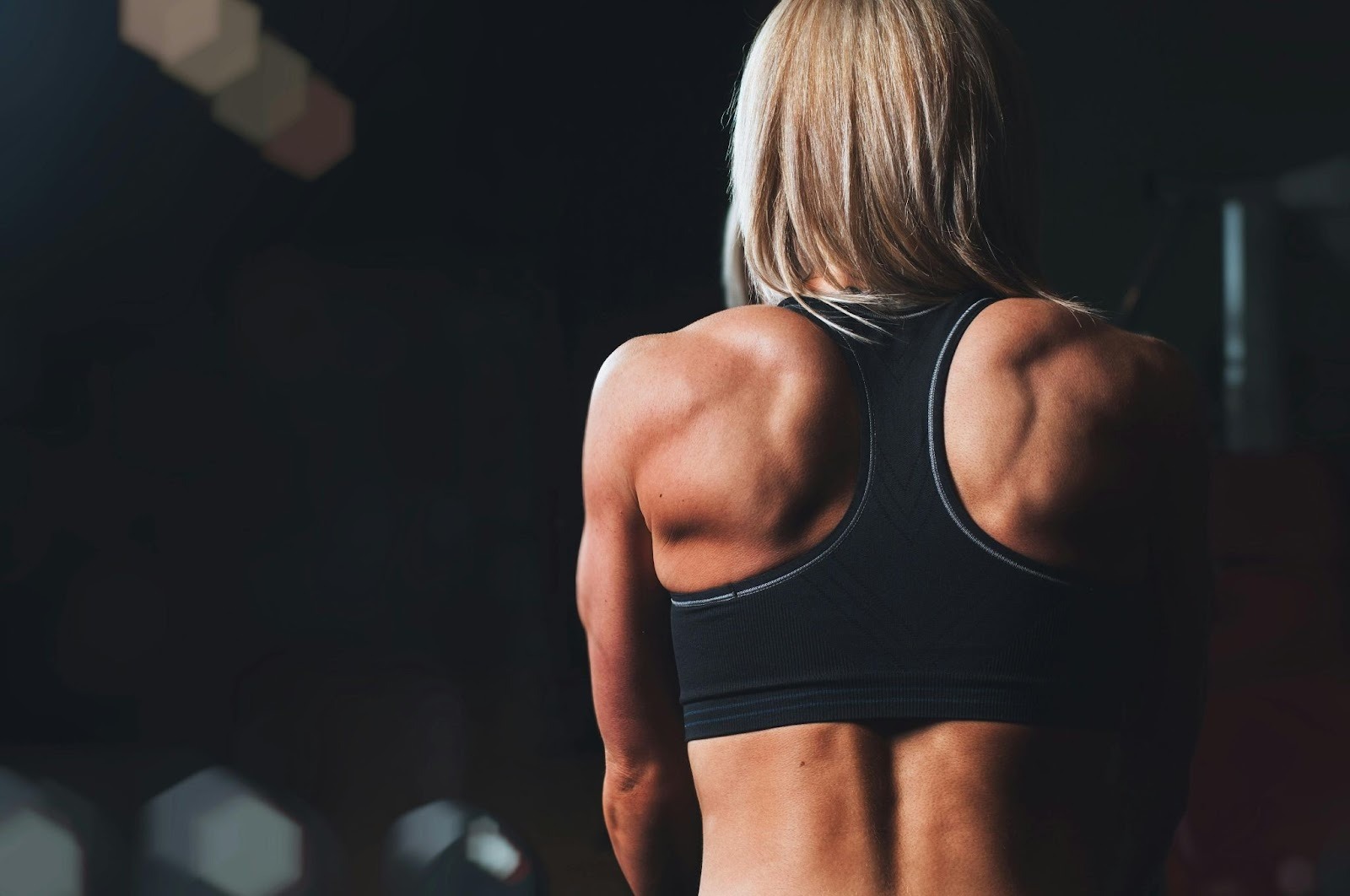
Unlike broad reshaping, sculpting zeroes in specific zones like love handles or arms. Sessions are short, often 30 minutes, with no downtime. It’s ideal for fit individuals seeking sharper lines rather than major fat loss.
What Are the Core Differences Between Body Contouring vs. Body Sculpting?
The primary keyword “body contouring vs. body sculpting” highlights distinct approaches. Body contouring tackles fat and skin comprehensively, while body sculpting builds muscle for definition. Here’s a comparison table:
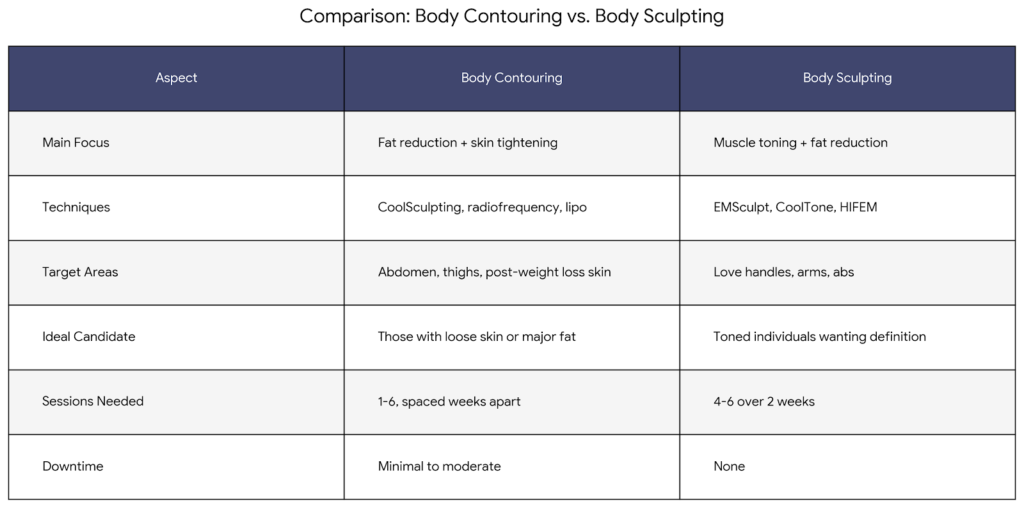
This table clarifies the difference between body contouring and body sculpting, helping you align treatments with goals. Contouring transforms silhouettes holistically; sculpting chisels for aesthetics.
What Techniques Are Used in Body Contouring?
Non-invasive body contouring uses cryolipolysis to freeze fat cells, which die off naturally over months. A 2024 study showed 20-25% fat reduction per session in treated areas.
Radiofrequency (RF) heats tissue to tighten skin and melt fat, popular for post-pregnancy bellies. Ultrasound like UltraShape disrupts fat via sound waves. Surgical options like abdominoplasty remove excess skin permanently.
What Techniques Are Used in Body Sculpting?
High-Intensity Focused Electromagnetic (HIFEM) energy in EMSculpt triggers 20,000 supramaximal contractions per session, equivalent to intense workouts. Results mimic months of gym time, with 16% average muscle gain and 19% fat loss.
CoolTone employs magnetic muscle stimulation for similar effects. Laser sculpting like SculpSure adds targeted fat zap while promoting tone. These build on fitness routines for “gym-sculpted” physiques.
What Are the Benefits of Body Contouring?
Body contouring boosts confidence by erasing diet-resistant fat and sagging skin. Benefits include up to 25% fat reduction without incisions, minimal scarring, and natural-looking results over 2-3 months.
It’s versatile for larger areas, improving posture and clothing fit. Long-term stats from 2025 show 85% patient satisfaction rates, with sustained results when paired with healthy habits. Skin tightening prevents post-fat-loss looseness.
What Are the Benefits of Body Sculpting?
Sculpting delivers visible muscle definition fast, ideal for “six-pack” abs or toned thighs. Benefits feature zero downtime, pain-free sessions, and dual fat-muscle action—19% fat drop and 16% muscle increase per clinical data.
It’s motivational for active lifestyles, enhancing workout outcomes. 2026 trends show EMSculpt users report 90% improved body image, per practitioner surveys. No anesthesia means immediate activity resumption.
What Are Recent Statistics and Real Examples for These Treatments?
Demand for these treatments surges: The global body contouring market hit $1.8 billion in 2025, projected to grow 12.5% annually to $4.5 billion by 2030. Non-invasive procedures now comprise 75% of cases, up from 60% in 2022.
Celebrity examples include Kim Kardashian crediting CoolSculpting for contours and athletes using EMSculpt for recovery. These validate efficacy across platforms.
Who Should Choose Body Contouring or Body Sculpting?
Opt for body contouring if excess skin or widespread fat persists post-weight loss. It’s transformative for mommy makeovers or bariatric patients.
Choose body sculpting for muscle enhancement in already lean bodies, like pre-event toning. Consult a certified provider to assess BMI and skin elasticity. Hybrid approaches combining both yield optimal outcomes.
What Are the Risks and Considerations?
Both are safe, but contouring risks include temporary redness or asymmetry (5-10% cases). Sculpting may cause muscle soreness like post-gym. Rare issues: paradoxical fat growth (0.01%). Always select board-certified pros. Costs: $2,000-$5,000 per area.
How Do Costs Compare?
Body contouring cost:
- Non-surgical: ~$3,500 per session
- Surgical options: up to $10,000
Body sculpting cost:
- $750–$1,000 per session
- Typical package: $3,000–$4,000
Insurance coverage:
- Rarely covered by insurance
- Financing options are often available
Value proposition:
- Focuses on long-term outcomes
- Results can last years with proper maintenance
Conclusion
In choosing body contouring vs. body sculpting, your goals decide the path: fat and skin overhaul via contouring, or muscle definition through sculpting. Both increase confidence and complement healthy lifestyles, with non-invasive advances making 2026 the prime time for transformation. Pair them with diet and exercise for enduring results that turn heads and fit your life.
FAQs
What is the main difference between body contouring and body sculpting?
Body contouring removes fat and tightens skin for overall shape, while body sculpting tones muscles for definition.
Is body contouring or sculpting better for weight loss?
Neither replaces diet/exercise; contouring aids fat loss more, sculpting enhances tone.
How many sessions for body contouring vs. body sculpting results?
Contouring: 1-3; sculpting: 4-6. Full effects in 1-3 months.
Are these treatments painful?
Minimal discomfort: contouring feels cold, sculpting like intense workouts. No anesthesia needed.
Can I combine body contouring and body sculpting?
Yes, many protocols pair them for fat loss + muscle gain.
Who isn’t a good candidate?
Those with obesity, certain medical conditions, or unrealistic expectations. Consult first.