Deciding between a surgical facelift and a non-surgical face lift in Peoria requires evaluating expected outcomes, risks, recovery, and cost. Each approach has distinct mechanisms and trade-offs that affect longevity and the post-procedure experience. This article compares both methods, highlighting differences in technique, benefits, complications, recovery timelines, and financial considerations to support an informed choice aligned with individual aesthetic objectives.
What Are the Key Differences Between Surgical and Non-Surgical Facelifts?
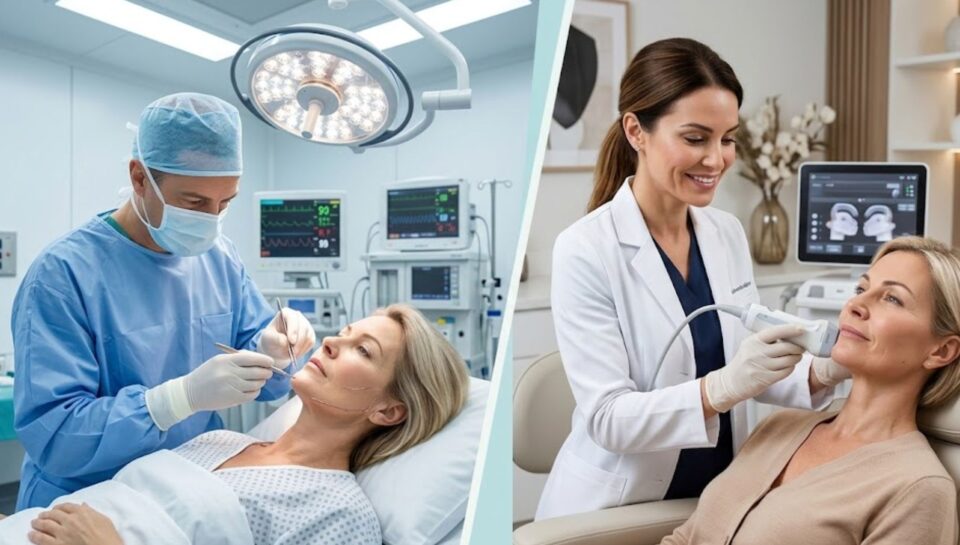
The principal distinction is procedural invasiveness and the tissues targeted. Surgical facelifts require incisions and direct modification of skin, subcutaneous tissue, and often the SMAS layer. Non-surgical options use minimally invasive modalities to achieve lift and volume restoration without formal excision.
Defining Surgical Facelift Procedures and Techniques
Rhytidectomy techniques include traditional full facelifts, limited or mini facelifts, and neck-specific procedures. These operations are performed under anaesthesia and involve incisions—commonly along the hairline and around the ear—to excise or reposition redundant skin and tighten deeper supporting structures. The expected outcome is a clear improvement in facial contour and reduction of sagging.
For a detailed review of facial ageing, relevant anatomy, and the range of rhytidectomy techniques, the following summary is instructive:
Surgical Facelift Techniques and Anatomy Overview
This chapter reviews the pathophysiology of the aging face and the surgical management of rhytidectomy. It examines the anatomy of the superficial musculoaponeurotic system (SMAS) and the facial nerve as they relate to facelift surgery. The text also summarises various rhytidectomy approaches, including limited and extended procedures (long flap technique, lateral SMASectomy, deep plane, composite, supra-SMAS, and extended supra-SMAS).
Rhytidectomy essentials, 2020
Overview of Non-Invasive Face Lift Options and Innovations
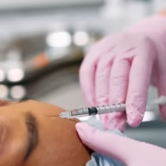
Non-surgical facial rejuvenation includes injectables (Botox and dermal fillers), microneedling, energy-based devices such as Emface, and biologic treatments like PRP. These modalities aim to stimulate neocollagenesis, restore volume, and improve skin quality without surgical incisions. Advantages typically include reduced downtime and subtler, more natural-looking improvements.
What Are the Benefits and Risks of Each Facelift Type?
A clear appraisal of benefits and complications is essential. Surgical and non-surgical facelifts each offer clinical advantages and have distinct risk profiles that should inform patient selection and consent.
Objective outcome assessment frequently utilises validated instruments to quantify patient-reported and clinical results for facial procedures:
Assessing Outcomes of Surgical and Non-Surgical Facelifts
Validated modules have been employed extensively to evaluate outcomes for both surgical and non-surgical aesthetic interventions, including facelifts, rhinoplasty, and minimally invasive procedures.
Measuring the impact of surgical and non-surgical facial cosmetic interventions using FACE-Q aesthetic module scales: a systematic review and meta-analysis, L Gallo, 2025
Non Surgical Facelift Benefits: Safety, Downtime, and Outcomes
Non-surgical approaches offer several advantages, including:
- Minimal Downtime: Most non-invasive procedures allow patients to return to routine activities shortly after treatment.
- Safety: These options generally carry fewer risks related to anaesthesia and major surgical complications.
- Natural-Looking Results: Treatments commonly provide modest improvements in texture and firmness without the more pronounced changes of surgery.
Surgical Facelift Advantages and Potential Complications
Surgical facelifts offer distinct advantages, such as:
- Long-Lasting Results: Surgical intervention typically yields more durable and substantial correction than non-surgical alternatives.
- Comprehensive Lifting: Surgery addresses significant skin laxity and volume displacement to restore facial contours.
- Potential Complications: Surgical procedures carry risks including infection, scarring, hematoma, nerve injury, and anaesthesia-related events; these warrant careful preoperative evaluation.
How Do Recovery Times and Aftercare Compare for Facelifts in Peoria?
Recovery expectations and aftercare differ between approaches and affect patient planning and experience.
Facelift Recovery Time Peoria AZ: Surgical Expectations
Typical recovery after a surgical facelift spans approximately 2 to 4 weeks. Patients commonly experience swelling, ecchymosis, and discomfort. Postoperative management includes activity restrictions, wound care, analgesia, and scheduled follow-up to monitor healing and address complications.
Non-Surgical Facelift Recovery and Maintenance Protocols
Non-surgical treatments usually require minimal recovery, with many patients resuming normal activity within one to two days. Maintenance often involves periodic treatments—such as repeat injections or skin rejuvenation sessions—to preserve effects.
What Are the Cost Considerations and Patient Suitability Factors?
Cost varies substantially by procedure type, extent of treatment, provider expertise, and patient-specific factors. Financial considerations should be part of the decision-making process.
Cost of Surgical Facelift Peoria: Pricing and Financing Options
Surgical facelift pricing in Peoria typically ranges from approximately $7,000 to $15,000, depending on procedural complexity and surgeon experience. Many clinics offer financing plans to assist with out-of-pocket expenses.
Determining the Best Facelift Surgeon Peoria AZ for Your Needs
Choose a surgeon based on objective credentials such as board certification, demonstrable experience, and verified patient outcomes. Thorough research and in-person consultations enable assessment of technical fit and alignment with aesthetic goals.
For those interested in exploring various options, aesthetics services offer treatments designed to enhance natural features.
To learn more about the team and the philosophy behind the practice, visit the about Eterna Wellness page.
If you have questions or wish to schedule a consultation, please contact us to arrange an appointment.
Frequently Asked Questions
What factors should I consider when choosing between a surgical and non-surgical facelift?
Key considerations include the degree of correction required, desired longevity of results, acceptable recovery time, and budget. Surgical facelifts deliver more substantial and longer-lasting changes but involve greater recovery and cost. Non-surgical modalities are less invasive with shorter downtime but may require repeated treatments. A qualified consultation will clarify which option best meets your priorities.
How long do the results of a non-surgical facelift last?
Duration varies by modality. Dermal fillers commonly persist for 6 to 18 months, while Botox effects typically last 3 to 6 months. Biologic treatments such as PRP may provide more durable improvements in skin quality. Regular maintenance sessions are frequently recommended to sustain outcomes.
Are there any age restrictions for undergoing facelift procedures?
There are no strict age cutoffs; candidacy is determined by overall health, skin condition, and aesthetic objectives rather than chronological age. Patients seeking facelifts commonly range from their 30s to 70s. Younger individuals may prefer non-surgical measures for early changes, while older patients with significant laxity may be better served by surgery. A clinical assessment will determine suitability.
What should I expect during the consultation for a facelift?
A consultation includes a comprehensive review of medical history, examination of skin and facial structure, and discussion of realistic outcomes and risks. The clinician will outline available techniques, the postoperative course, and cost estimates, and may take clinical photographs to inform a personalised treatment plan.
Can I combine facelift procedures with other cosmetic treatments?
Combining procedures is common to achieve comprehensive rejuvenation. Examples include pairing facelifts with blepharoplasty, brow lifts, or adjunctive non-surgical treatments such as fillers and neuromodulators. Timing and safety considerations should be discussed with the surgeon to devise an individualized plan.
What are the signs that I might be a good candidate for a facelift?
Suitable candidates typically present with skin laxity, deep nasolabial or marionette folds, and loss of facial volume. Ideal candidates are in good general health, have realistic expectations, and do not smoke. A specialist evaluation will determine candidacy based on specific anatomical findings and goals.
Conclusion
Choosing between a surgical facelift and a non-surgical lift significantly shapes the course of facial rejuvenation. Understanding procedural differences, expected benefits, potential risks, and recovery requirements enables an evidence-informed decision aligned with individual goals. For tailored recommendations, schedule a consultation with the clinical team at Eterna Wellness MD to review your options and develop a personalized plan.