Short answer: No. More medical testing doesn’t mean better health. Running a wide net of labs, scans, and biomarkers increases the odds of false positives and incidental findings, which can trigger unnecessary follow-up care and anxiety without improving how long or how well you actually live. The goal should be the right data, at the right time for the right reason.
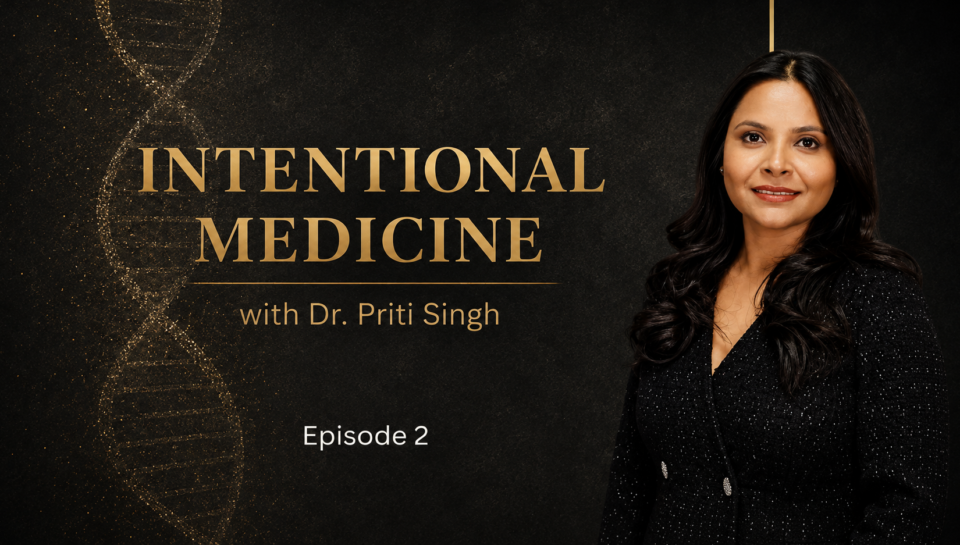
Modern healthcare is built to manage disease. Intentional Medicine is built to design wellness. This series explores the frameworks and mindset shifts that help you take real ownership of your long-term health through clarity and intention.
Why Do We Assume More Testing Means Better Health?
Annual blood panels, continuous glucose monitors, smartwatches, and direct-to-consumer kits testing 100+ biomarkers have made health data more accessible than ever. Accessibility thus got mistaken for accuracy. More visibility feels like more control. But diagnostics are a tool meant to serve a clinical story, not replace one. When testing becomes the default instead of a deliberate choice, it starts working against you instead of for you.
How Does More Testing Erode Trust in Your Body?
Wide-net testing produces statistically inevitable false positives, and each one chips away at your confidence in your own body.
When a panel covers 100, 150, or 200 biomarkers, some results will fall outside the “normal” range almost by mathematical certainty because reference ranges are built from population averages, not from you specifically. A single outlier can trigger a cascade: a follow-up scan, a specialist referral, another test to rule something out, and weeks of low-grade anxiety over results that in the end mean nothing.
Instead of feeling reassured by data, many people end up feeling more uncertain and more dependent on the next test just to feel okay. That’s the opposite of what good diagnostics should do.
Is a “Normal” Lab Result the Same as an “Optimal” One?
No. A result inside the standard reference range and a result that’s right for you are two different things.
Reference ranges are population statistics, not personal targets. Your optimal baseline depends on your history, your goals, your symptoms, and the trend of your own numbers over time, not just whether you land inside someone else’s bell curve. Testing without that context can create false reassurance, or false alarm in either direction.
What’s the Hidden Cost of Wearables and 24/7 Health Monitoring?
Unstructured, round-the-clock tracking without a clear purpose can cause hypervigilance fatigue and chronic low-grade anxiety from constantly monitoring your own body.
Continuous biometric tracking has real value when tied to a specific question- training load, sleep quality during a treatment plan, glucose response to a diet change. But when every heart rate spike, sleep score dip, or HRV dot becomes something to interpret and worry about, the body stops feeling like a place to live in and starts feeling like a dashboard to manage. Over time, that constant self-surveillance slowly erodes the very thing wellness is supposed to protect: your ability to enjoy your life.
How Do You Decide If a Medical Test Is Worth Running?
Ask four questions before agreeing to any lab panel, scan, or screening. If a test can’t clearly answer at least one, it’s probably noise, not insight.
- What specific question are we trying to answer?
Every test should be tied to a clear clinical question.
- How will the result actually change my plan?
If a result wouldn’t change a single decision about your care, reconsider whether it’s necessary right now.
- Is this the right moment in my story to be testing this?
Timing matters. The same test can be essential at one stage and premature or irrelevant at another.
- What is my baseline, and what trend are we tracking?
A single data point tells you far less than a trend. Know what you’re comparing the result against.
Bring this framework to your next doctor’s visit. It turns testing from a passive, reflexive habit into an active, informed decision you make with your provider, not just for them.
To go deeper on this topic, you can watch Dr. Singh’s podcast, the Intentional Medicine Show, on YouTube.
Is It True That Running More Tests Catches Every Problem Early?
No, this is one of the most common, and most misleading, assumptions in preventive health.
When you order a panel covering 200 biomarkers, you are virtually guaranteed to see 10–20 “abnormal” results. Not because something is actually wrong, but because, again, reference ranges are built on population averages, not on you. Each flagged result can spiral into more testing, more specialist referrals, and more anxiety, while the foundations that actually drive long-term health sleep, nutrition, movement, stress management, and human connection go untouched.
The Intentional Medicine approach flips the equation. Start with the story, then choose the test. Not the other way around.
What Are the Key Takeaways?
- More medical testing does not automatically mean better health outcomes.
- Over-testing increases the odds of false positives and incidental findings, which can lead to unnecessary procedures and anxiety.
- A “normal” lab result isn’t necessarily an optimal one for your individual baseline.
- Wearables and continuous monitoring carry a hidden psychological cost: hypervigilance fatigue.
- Use the four-question framework before agreeing to any new test or scan.
- Sustainable health is built on daily habits (sleep, nutrition, movement, stress, connection) not on chasing more data points.
Frequently Asked Questions
Does more lab testing improve health outcomes?
Not necessarily. More testing increases the likelihood of false positives and incidental findings, which can lead to unnecessary follow-up procedures and anxiety, without improving actual health outcomes.
Why do “abnormal” lab results show up even in healthy people?
Reference ranges are based on population averages, not on any one individual. Testing a large number of biomarkers statistically guarantees some results will fall outside the “normal” range, even when nothing is actually wrong.
What should I ask my doctor before agreeing to a test?
Ask what specific question the test answers, how the result will change your treatment plan, whether it’s the right time in your health story for that test, and what baseline or trend is being tracked.
Is wearable health tracking bad for you?
Not inherently, but continuous biometric monitoring without a clear purpose can contribute to hypervigilance fatigue, where constant data tracking creates anxiety rather than genuine insight.
What is “Intentional Medicine”?
Intentional Medicine is an approach to healthcare that starts with a person’s clinical story and goals, then chooses tests and interventions deliberately to serve that story rather than running broad panels by default.
Have a question or a topic you’d like covered in the next edition? Reach out and share it, your input shapes what we cover next.
Until next month, The Eterna Wellness MD Team