Intentional medicine is a proactive, personalized approach to healthcare that focuses on preventing disease before it starts, rather than only treating it after it appears. Instead of waiting for a diagnosis, intentional medicine looks at foundational health (sleep, nutrition, stress, metabolism), tracks meaningful biomarkers over time, personalizes treatment to the individual, and uses regenerative therapies responsibly to help people not just avoid illness, but truly thrive.
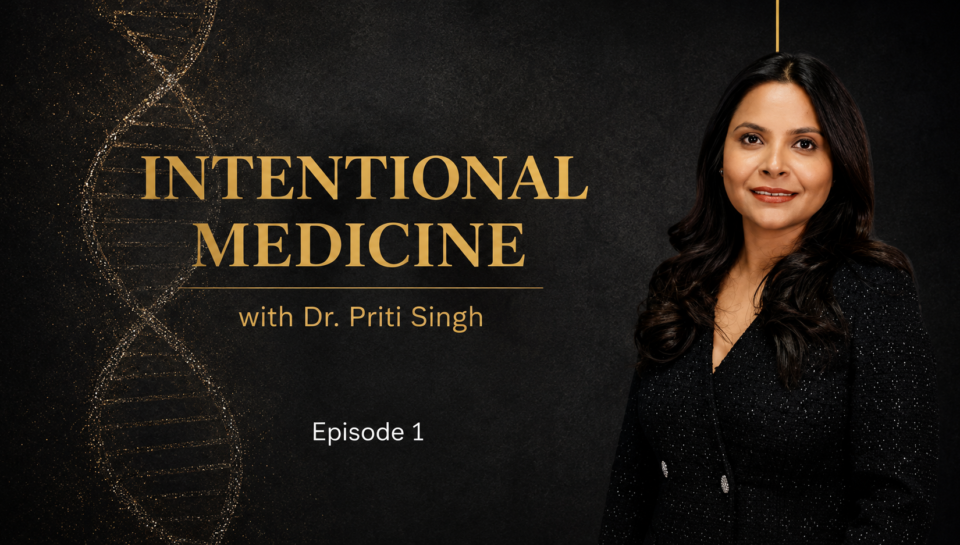
This concept is the foundation of a new podcast, Intentional Medicine, hosted by internal medicine physician and founder of Eterna Wellness MD, Dr. Priti Singh. In the debut episode, Dr. Singh sits down with host Layla to unpack why modern healthcare is so good at crisis response and so underprepared for prevention.
Below, we break down the key ideas from that conversation, including the four pillars of intentional medicine, why reactive care is costing us more than we realize, and how to know if this approach is right for you.
Why Modern Medicine Excels at Crisis Care but Struggles with Prevention?
Modern hospital systems are remarkable at emergency intervention — saving lives every single day through advanced technology, surgery, and acute care protocols. But that same system is largely structured to respond to disease, not prevent it.
Dr. Singh points to a telling statistic: roughly 6 in 10 adults in the U.S. live with at least one chronic disease, and about 90% of U.S. healthcare spending goes toward managing chronic conditions, not preventing them in the first place.
Her own turning point wasn’t a single dramatic moment. It was a gradual realization built from years in hospital leadership: watching patients receive a stent, only to return months later for another procedure or bypass surgery. Watching energetic, vibrant people in her own community begin to feel fatigued and foggy — and being told that’s “just aging.” That normalization of decline, she argues, is exactly what intentional medicine pushes back against.
What Is Intentional Medicine, Exactly?
Intentional medicine isn’t a new medical curriculum, a replacement for functional medicine, or a rebrand of longevity medicine. It’s best understood as a different way of practicing the same medicine: one that is more proactive, precise, preventive, and personalized.
Rather than starting with the question “What’s wrong with you?”, intentional medicine starts with “What can we do to keep this from happening in the first place and help you thrive, not just survive?”
The 4 Pillars of Intentional Medicine
| Pillar | What It Means | Why It Matters |
| 1. Foundation First | Stabilize the basics: sleep, nutrition, energy, and nervous system regulation before layering on advanced treatments | Advanced therapies built on a weak foundation don’t hold; addressing fundamentals first improves outcomes at every level |
| 2. Measure What Matters | Track meaningful biomarkers over time to identify patterns and trends, not just isolated lab values | The goal isn’t a single point-in-time diagnosis it’s spotting the trajectory of your health before it declines |
| 3. Personalize Intelligently | Tailor care to each person’s genetics, environment, stress levels, and life stage instead of applying one-size-fits-all protocols | No two people respond to the same intervention the same way. Personalization is what makes prevention effective |
| 4. Regenerate with Responsibility | Use advanced tools like peptides, hormone optimization, and regenerative therapies thoughtfully and safely | Not every trending treatment is appropriate for every person; responsible use protects long-term health outcomes |
What is the Real Cost of Reactive Medicine?
One of the most powerful points in the episode is how much lead time chronic disease actually gives us — and how often that window gets missed.
- Insulin resistance can develop 10–15 years before a full type 2 diabetes diagnosis.
- Cardiovascular plaque takes years, not weeks or months, to build up before a heart attack occurs.
By the time a patient reaches the clinic in crisis, the disease process has often been unfolding for over a decade. Reactive medicine treats the emergency — but intentional medicine asks a different question much earlier: why is this happening, and can we intervene before it becomes irreversible?
The cost of skipping that intentional window isn’t just financial (though the U.S. spends about 18% of GDP on healthcare, with the vast majority going to chronic disease management). It’s also measured in years of healthspan — the time people spend living with reduced energy, mobility, and vitality that could have been preserved.
How Advanced Tools Fit In (Without the Hype)
Peptides, hormone optimization, and regenerative therapies get a lot of attention on social media — and patients often arrive asking about the latest trend they saw online. Dr. Singh’s approach is to slow down and start with the same four pillars: understanding a patient’s lifestyle, sleep, stress, and dietary habits first, then layering in clinical assessment and biomarker testing before deciding what’s appropriate.
Crucially, the goal is defined collaboratively. A postmenopausal woman who wants to move through her day without exhaustion has a different goal than someone training for a marathon — and their care plans should reflect that, rather than following an identical protocol.
Who Is Intentional Medicine For?
According to Dr. Singh, this approach is for:
- Anyone already on a wellness journey looking for a more strategic path
- Anyone just starting out and unsure where to begin
- Anyone who feels frustrated or unheard by the traditional, crisis-driven healthcare model
- Both men and women, across age groups — not a niche or gender-specific approach
- For practitioners who feel frustrated by medicine, treating symptoms without truly healing patients or fixing a failing healthcare system.
As Dr. Singh puts it, health doesn’t discriminate and intentional medicine aims to make prevention-focused, personalized care accessible to everyone, not just the small percentage who can decode conflicting health information online.
Listen to the Full Episode
This article covers the highlights, but Dr. Priti Singh goes much deeper in the full conversation — including real patient scenarios and how the four pillars come together in practice at Aeterna Wellness MD.
🎧Watch/Listen to Episode 1 of Intentional Medicine with Dr. Priti Singh →
Subscribe and follow so you don’t miss upcoming episodes on hormones, metabolic health, and regenerative medicine.
FAQs
What is intentional medicine?
Intentional medicine is a proactive, prevention-first approach to healthcare that focuses on stabilizing foundational health, tracking meaningful biomarkers, personalizing treatment, and using regenerative therapies responsibly — with the goal of preventing chronic disease rather than only treating it after diagnosis.
How is intentional medicine different from traditional medicine?
Traditional medicine is largely built around diagnosing and treating disease once symptoms or lab abnormalities appear. Intentional medicine asks what can be done years earlier to prevent that diagnosis from happening at all, while still using evidence-based clinical tools.
Is intentional medicine the same as functional or longevity medicine?
Not exactly. Intentional medicine isn’t a separate medical curriculum or specialty — it’s a mindset and framework for practicing medicine more proactively, precisely, and preventively, which can complement functional, longevity, or precision medicine approaches.
What are the 4 pillars of intentional medicine?
The four pillars are:
(1) Foundation First — stabilizing sleep, nutrition, and energy;
(2) Measure What Matters — tracking biomarker patterns over time;
(3) Personalize Intelligently — tailoring care to the individual; and
(4) Regenerate with Responsibility — using advanced therapies safely and appropriately.
Why does intentional medicine emphasize sleep and nervous system regulation before advanced treatments?
Because advanced therapies are far less effective — and can even be counterproductive — when built on top of unstable fundamentals like poor sleep, dysregulated stress, or unmanaged metabolism. Foundational health has to be addressed first.
What is the real cost of skipping prevention and jumping straight to treatment?
Beyond the financial burden of chronic disease management, the biggest cost is healthspan — the years of energy, mobility, and vitality that are lost when preventable conditions like insulin resistance or cardiovascular disease are caught only after they’ve already progressed for years.
Who is intentional medicine for?
It’s designed for anyone — men or women, at any stage of a wellness journey — who wants a more preventive, personalized approach to their health, especially those who feel rushed or unheard within the traditional healthcare system.
Where can I learn more about intentional medicine?
The Intentional Medicine podcast with Dr. Priti Singh explores these concepts in depth, with future episodes covering hormones, metabolic health, and regenerative medicine.