PRP hair restoration is becoming an increasingly popular non-surgical option for people dealing with thinning hair, reduced hair density, widening parts, and early pattern hair loss.
But effective hair restoration should not start with a procedure.
It should start with an assessment.
Depending on the patient’s needs, a comprehensive hair restoration plan may include PRP, exosome-based treatments, targeted scalp therapies, GHK-Cu (copper peptides), and medications such as minoxidil when clinically appropriate.
The goal is not to give every patient the same treatment.
The goal is to determine what your hair needs and build a plan around it.
What Is PRP Hair Restoration?
PRP hair restoration uses platelet-rich plasma derived from your own blood to support the scalp and hair follicles.
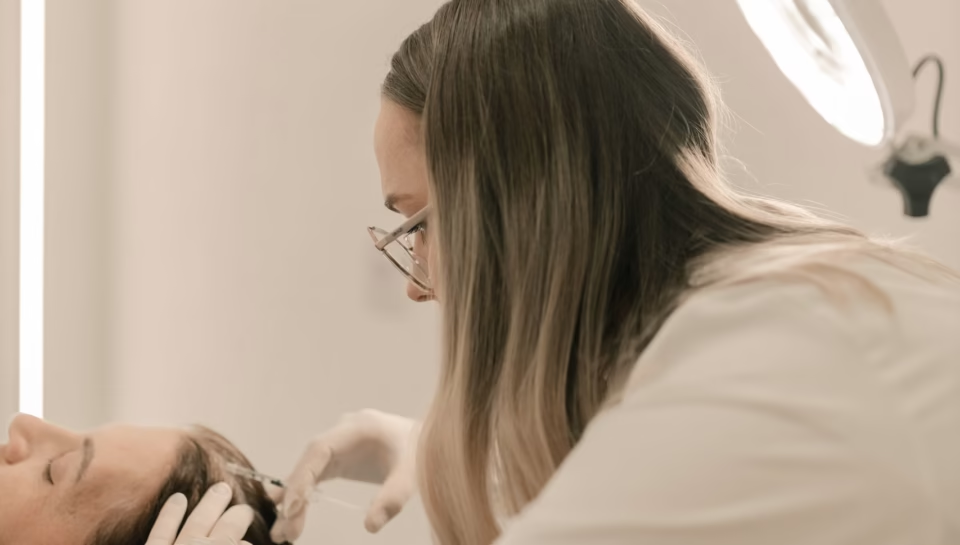
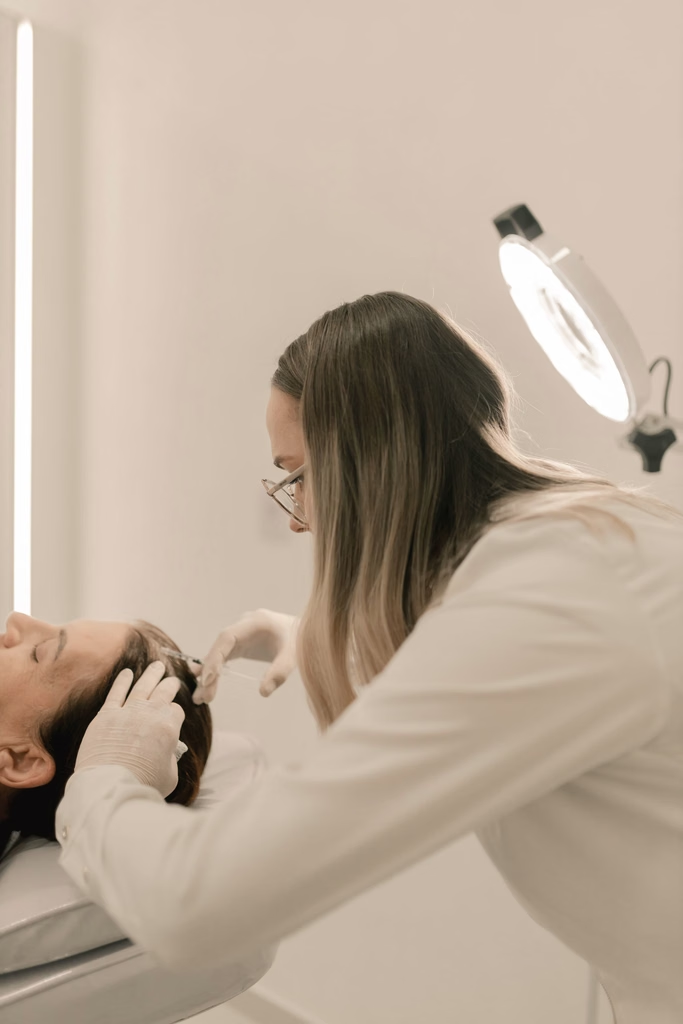
During treatment, a small blood sample is collected and processed to concentrate platelets and growth factors. The PRP is then applied or injected into areas of the scalp affected by thinning.
PRP is being studied extensively for androgenetic alopecia, also known as male or female pattern hair loss. A 2024 systematic review and meta-analysis of randomized clinical trials found that PRP was associated with increased hair density compared with placebo, although the researchers noted that the evidence was limited by significant variation between studies and overall low evidence quality.
That means PRP can be a useful tool, but it should not be presented as a guaranteed cure for hair loss.
How Does PRP Hair Restoration Work?
Hair follicles naturally move through different stages of growth and rest.
When follicles begin producing thinner strands or spending less time in the growth phase, overall hair density can gradually decrease.
PRP delivers concentrated platelets and growth factors to the scalp with the goal of supporting the follicular environment.
The objective is not simply to create new hair overnight.
It is to support follicles that are still active and potentially improve the appearance of hair density and thickness over time.
Why Start With a Hair Loss Assessment?
Hair loss is not always caused by the same thing.
A receding hairline and gradual crown thinning may suggest pattern hair loss. Sudden shedding may have a different cause. Patchy hair loss, scalp inflammation, nutritional deficiencies, hormonal changes, medications, and certain medical conditions can also contribute to hair loss.
That is why personalized hair restoration in Peoria, AZ should begin with an evaluation.
Your assessment may consider:
- Your pattern and degree of hair thinning
- Hair density and strand thickness
- Scalp health
- Shedding pattern
- Family history
- Current medications and supplements
- Nutrition and lifestyle factors
- Hormonal or medical factors when clinically appropriate
- Previous hair-loss treatments
- Your personal goals
Once the likely cause and stage of hair loss are understood, your provider can determine which treatments may make sense.
What Can Be Included in a Personalized Hair Restoration Plan?
There is no single treatment that works for everyone.
Depending on the individual, a personalized plan may include several complementary approaches.
PRP
PRP can be used to deliver concentrated platelets and growth factors to targeted areas of the scalp.
It is one of the main regenerative tools used in our approach to PRP hair restoration.
Exosome-Based Treatments
Exosomes are extracellular vesicles involved in cell-to-cell signaling and are being investigated for potential applications in regenerative medicine, including hair restoration.
However, this is an emerging area of treatment.
The FDA states that there are currently no FDA-approved exosome products and has warned consumers about unapproved products marketed as regenerative treatments.
For that reason, patients should ask what product is being used, how it is sourced, what evidence supports its use, and whether the treatment is appropriate for their specific situation.
GHK-Cu and Copper Peptides
GHK-Cu, also called a copper peptide, has attracted interest in regenerative and cosmetic applications because of its role in cellular signaling and tissue biology.
Some hair restoration protocols incorporate peptide-based scalp support as an adjunctive therapy.
However, GHK-Cu should not be presented as a proven standalone treatment for hair loss. The clinical evidence specifically supporting GHK-Cu for hair regrowth is much less established than the evidence surrounding conventional treatments such as minoxidil.
Its role, if used, should be considered within a broader personalized plan.
Minoxidil
For certain types of hair loss, minoxidil remains an important medical treatment option.
Because minoxidil and PRP work differently, some patients may be candidates for a combination approach.
A 2024 systematic review and meta-analysis found that adding PRP to topical minoxidil was associated with better hair-density outcomes than minoxidil alone in the included trials. However, the authors rated the certainty of evidence as low to very low and noted limitations in the available studies.
This is why medication decisions should be individualized rather than automatically added to every hair restoration protocol.
Why Combine PRP With Other Hair Loss Treatments?
The question is not necessarily:
“PRP or minoxidil?”
For some patients, the better question may be:
“Could different treatments work together as part of my overall hair restoration plan?”
For an appropriate patient, a physician may consider a combination such as:
Assessment → diagnosis → medication when appropriate → PRP → targeted scalp treatment → supportive regenerative therapies → progress monitoring
The exact combination will depend on the individual’s diagnosis, medical history, treatment goals, and response.
More treatments do not automatically mean better results.
Personalization matters more than the number of treatments.
PRP Hair Restoration vs. Hair Transplant
PRP hair restoration is a non-surgical approach.
A hair transplant is a surgical procedure that moves hair follicles from one area of the scalp to another.
These approaches serve different purposes.
PRP may be considered when the goal is to support existing, active follicles and improve the appearance of thinning hair.
A hair transplant may be considered when there are areas of significant or permanent hair loss where follicles are no longer producing sufficient hair.
A consultation can help determine which approach is more appropriate.
Who May Be a Candidate for PRP Hair Restoration?
PRP hair restoration may be considered for men and women experiencing early-to-moderate hair thinning, particularly when follicles are still active.
Common concerns include:
- Thinning at the crown
- A widening part
- Reduced ponytail volume
- Receding hairline
- Diffuse thinning
- Gradual reduction in hair density
- Early pattern hair loss
However, PRP is not appropriate for every type of hair loss.
If hair loss is sudden, severe, patchy, or associated with scalp symptoms, a medical evaluation is especially important.
What Happens During PRP Hair Restoration?
The exact protocol depends on your individualized treatment plan.
A typical PRP session may involve:
1. Blood collection
A small amount of blood is collected.
2. PRP preparation
The sample is processed to concentrate the platelet-rich portion.
3. Scalp preparation
The treatment area is prepared, and numbing may be used to improve comfort.
4. Targeted treatment
PRP is delivered to areas of thinning according to the treatment plan.
Some protocols may also incorporate microneedling or other targeted scalp treatments.
5. Follow-up
Your response is monitored over time, and the treatment plan can be adjusted when needed.
Does PRP Hair Restoration Hurt?
Most patients tolerate PRP hair restoration well.
Because the treatment involves injections into the scalp, some patients may experience temporary pinching, tenderness or discomfort.
Numbing methods can be used depending on the treatment protocol.
Temporary redness, swelling or bruising may also occur.
Your provider should explain what to expect before treatment.
When Will You See Results From PRP Hair Restoration?
Hair does not grow instantly after treatment.
Hair follicles follow natural growth cycles, so changes usually develop gradually.
Some patients may notice changes in shedding or hair texture before visible density changes become apparent.
More noticeable changes generally require several months of treatment and follow-up.
Your individual response will depend on factors such as the cause and stage of hair loss, follicle health, treatment plan, and consistency with recommended care.
How Many PRP Treatments Are Needed?
There is no single treatment schedule that is appropriate for everyone.
The number and frequency of PRP sessions depend on your hair-loss pattern, treatment goals and response.
Rather than automatically recommending the same number of sessions to every patient, a personalized PRP hair restoration plan can be adjusted based on progress.
Maintenance may also be considered because pattern hair loss is a chronic process.
What Results Should You Expect?
The goal of hair restoration is realistic improvement, not an overnight transformation.
Depending on the patient and treatment plan, goals may include:
- Reduced appearance of thinning
- Improved hair density
- Thicker-looking strands
- Better scalp coverage
- Slower progression of hair loss
- Improved overall appearance of fullness
Results vary from person to person.
The earlier active follicles are evaluated, the more options may be available for supporting them.
Is PRP Hair Restoration Safe?
PRP uses your own blood, but that does not mean the treatment is completely risk-free.
Possible temporary effects include:
- Redness
- Tenderness
- Swelling
- Bruising
- Scalp sensitivity
- Temporary irritation
Your medical history should be reviewed before treatment to determine whether PRP or other components of a hair restoration plan are appropriate.
If medications such as minoxidil are included, potential side effects and contraindications should also be discussed.
Why Choose Personalized Hair Restoration in Peoria, AZ?
Searching for hair restoration in Peoria, AZ can bring up many different treatment options, from PRP and regenerative therapies to medications and surgical hair transplantation.
The important question is not simply which treatment is most popular.
It is which treatment is appropriate for your type of hair loss.
At Eterna Wellness MD, our hair restoration approach is designed around assessment and personalization.
Our advanced regenerative hair restoration service combines PRP, exosomes and targeted scalp treatment, with physician-customized plans focused on thinning and shedding.
When appropriate, a broader plan may also consider medications such as minoxidil and supportive options such as GHK-Cu/copper peptides.
Hair Restoration for Patients in Peoria and the West Valley
If you are searching for PRP hair restoration in Peoria, AZ, Eterna Wellness MD provides hair restoration care in Peoria for patients looking for a non-surgical approach to thinning hair and reduced density.
Our approach to PRP hair restoration focuses on understanding the individual’s hair-loss pattern, scalp health, medical history, and goals before developing a personalized treatment plan.
The first step is not deciding between PRP, exosomes, peptides or medication.
The first step is understanding your hair loss.
Book a call with us today.
Frequently Asked Questions About PRP Hair Restoration
What is PRP hair restoration?
PRP hair restoration uses platelet-rich plasma prepared from your own blood and applied or injected into areas of scalp thinning. It is intended to support the follicular environment and may improve hair density in some patients.
Is PRP good for hair loss?
Research suggests PRP may improve hair density in some patients with androgenetic alopecia. However, study protocols vary and the overall evidence quality remains limited.
Can PRP and minoxidil be used together?
They may be used together in selected patients. Research suggests that combining PRP with topical minoxidil may provide better hair-density outcomes than minoxidil alone, although the available evidence has important limitations.
Can PRP be combined with exosomes?
Some hair restoration protocols combine PRP with exosome-based treatments. However, exosome therapy remains an emerging area, and the FDA states that there are currently no FDA-approved exosome products. Patients should discuss the specific product, sourcing, evidence and regulatory status with their provider.
What are copper peptides or GHK-Cu?
GHK-Cu is a copper-binding peptide that has been studied in skin and tissue biology. Some regenerative hair-care protocols use copper peptides as a supportive or adjunctive treatment, but evidence specifically establishing GHK-Cu as a hair-regrowth treatment is still limited.
Is PRP hair restoration better than a hair transplant?
They are different treatments. PRP is non-surgical and focuses on supporting existing follicles, while a transplant surgically moves follicles from one area of the scalp to another. Your candidacy depends on the cause and stage of hair loss.
How long does PRP hair restoration take to work?
Hair growth occurs gradually. Patients should expect to evaluate progress over several months rather than expecting immediate results.
Is PRP hair restoration for men and women?
PRP may be considered for both men and women with certain types of hair thinning. The underlying cause of hair loss should be assessed before treatment.