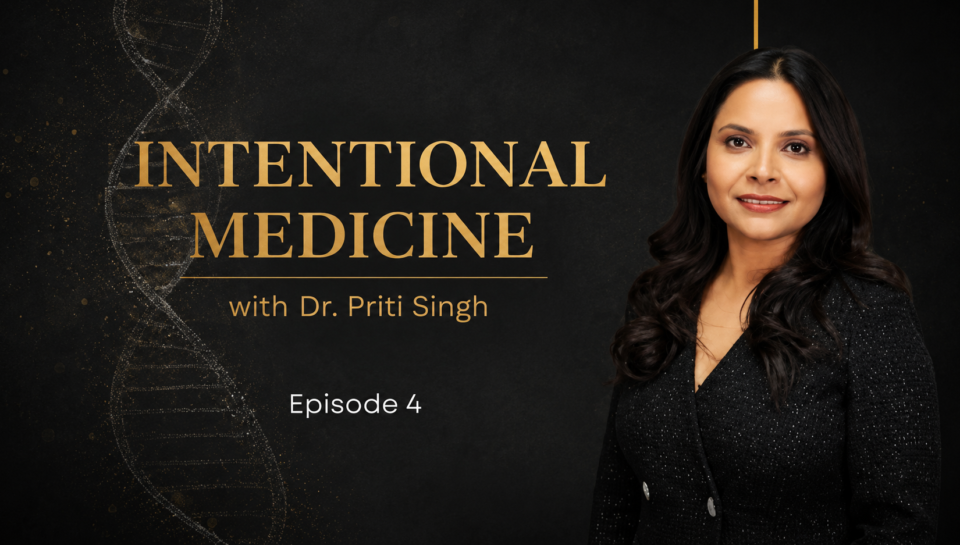
Chronic stress and aging are more closely connected than most people realize. Stress has become so common that most of us barely notice it anymore. Being busy is often seen as a sign of success. Running on little sleep is normalized. Feeling overwhelmed has become part of everyday life. But what if chronic stress is quietly accelerating aging, disrupting your hormones, weakening your immune system, and increasing your risk of chronic disease?
In Episode 4 of Intentional Medicine, Dr. Singh and Layla explore why stress is far more than an emotional experience. They explain the science behind chronic nervous system activation, cortisol dysregulation, and why managing stress is no longer just a wellness trend. It’s an essential part of longevity medicine.
Why Chronic Stress Is More Than Just Feeling Overwhelmed?
Unlike blood pressure, cholesterol, or blood sugar, stress doesn’t appear on a routine lab report.
That doesn’t mean it isn’t affecting your health.
Decades of research have shown that chronic stress influences nearly every major system in the body, including:
- Cardiovascular health
- Immune function
- Hormone balance
- Brain function
- Metabolic health
- Digestive health
The problem is that medicine has traditionally focused on treating measurable diseases rather than addressing the underlying physiological state driving many of them.
As Dr. Singh explains in this episode, chronic stress is not simply an emotion. It is a dysregulated physiological state that deserves the same attention as high blood pressure or diabetes.
The Link Between Chronic Stress and Aging
Stress activates your body’s survival response.
In short bursts, this is incredibly useful.
Your body releases hormones like cortisol and adrenaline to help you respond to danger.
The problem begins when that response never turns off.
Over time, chronically elevated cortisol can:
- Increase insulin resistance
- Promote abdominal (visceral) fat accumulation
- Break down lean muscle mass
- Suppress immune surveillance
- Disrupt deep restorative sleep
- Increase chronic inflammation
- Raise the risk of heart disease and metabolic disorders
Emerging research also suggests that chronic stress is associated with shorter telomeres, the protective caps on chromosomes often used as markers of biological aging.
In other words, chronic stress doesn’t just make you feel older. It may actually accelerate the aging process at the cellular level.
When do Healthy Habits Stop Working?
One of the most interesting discussions in this episode revolves around patients who appear to be doing everything “right.”
They exercise consistently.
They eat nutritious food.
They prioritize sleep.
Yet they continue to struggle with:
- Weight gain
- Poor recovery
- Fatigue
- Poor sleep quality
- Rising insulin levels
Often, the missing piece is chronic nervous system activation.
Dr. Singh shares the story of a high-performing executive whose cortisol rhythm had become completely disrupted after years of sustained stress. Despite following a healthy lifestyle, her body simply could not recover until the underlying stress response was addressed.
This is an important reminder that optimization cannot happen if the nervous system never receives the signal that it is safe.
What Chronic Nervous System Activation Actually Looks Like?
Many people don’t walk into a doctor’s office saying,
“I’m stressed.”
Instead, they report symptoms like:
- Waking up at 3 AM
- Feeling exhausted despite sleeping eight hours
- Digestive discomfort and bloating
- Frequent headaches
- Feeling constantly “on edge”
- Increased infections
- Brain fog
- Sugar cravings
- Hormonal changes
- Early perimenopausal symptoms
Because these symptoms affect different body systems, they are often treated individually instead of identifying the common root cause.
The nervous system.
Stress Doesn’t Just Affect Mental Health. It Undermines Every Health Pillar.
Throughout Intentional Medicine, Dr. Singh discusses the foundational pillars of health:
- Sleep
- Movement
- Nutrition
- Metabolic stability
This episode explains why stress sits underneath all of them.
When cortisol remains elevated:
- Sleep quality declines.
- Exercise recovery slows.
- Blood sugar regulation worsens.
- Fat loss becomes more difficult.
- Healthy habits produce fewer results.
This is why stress management is not separate from preventive medicine.
It is preventive medicine.
Is Breathwork Actually Backed by Science?
Breathwork often gets dismissed as something trendy.
But clinically, it may be one of the simplest ways to influence the autonomic nervous system.
Slow, controlled breathing activates the vagus nerve, helping shift the body from “fight or flight” into “rest and repair.”
Research has shown that regular breathwork may help:
- Lower blood pressure
- Improve heart rate variability (HRV)
- Reduce stress hormones
- Improve emotional regulation
- Support better sleep
- Reduce anxiety
One of Dr. Singh’s patients initially requested anti-anxiety medication before important meetings.
Instead, he was encouraged to practice just a few minutes of slow breathing beforehand.
Months later, he admitted that the breathing exercises had been more effective than he expected.
Sometimes the simplest interventions create the biggest physiological changes.
Next Read: What Is Metabolic Stability, and Why Should You Build It Before Trying Peptides or Hormone Therapy?
You Don’t Need Hours of Meditation
One of the biggest myths around stress management is that it requires hours of meditation every day.
It doesn’t.
Dr. Singh recommends building small, consistent habits such as:
- Two minutes of deep breathing before stressful meetings
- Taking a short walk after lunch
- Eating one meal without screens
- Creating a simple bedtime routine
- Spending a few minutes in nature
- Building transition moments between work and home life
These small resets help the nervous system recover instead of remaining in a constant state of activation.
Can You Measure Stress?
Yes.
Modern medicine offers several ways to assess nervous system health.
Some of the most useful tools include:
- Heart Rate Variability (HRV)
- Resting heart rate
- Sleep quality tracking
- Salivary cortisol testing (when clinically appropriate)
- Continuous glucose monitoring (CGM), which can sometimes reveal stress-related glucose spikes
However, numbers only tell part of the story.
Dr. Singh reminds patients to also ask themselves simple questions:
- Do I wake up feeling refreshed?
- Can I recover quickly after stressful situations?
- Do I generally feel calm and present?
Often, these answers provide just as much insight as wearable devices.
The Real Goal: Build Resilience Before You Need It
Most people discover stress-management techniques after burnout.
The better approach is to build resilience before reaching that point.
Just as we don’t wait for a heart attack before exercising, we shouldn’t wait for chronic illness before supporting the nervous system.
Stress is unavoidable.
Remaining trapped in it is not.
The goal isn’t to eliminate stress from life.
The goal is to recover from it more efficiently.
Key Takeaways from Episode 4
- Chronic stress accelerates biological aging.
- Cortisol affects metabolism, sleep, hormones, immunity, and inflammation.
- Nervous system health influences every other pillar of longevity.
- Breathwork is a science-backed clinical tool, not simply a wellness trend.
- Small daily habits consistently outperform occasional extreme interventions.
- Building resilience is one of the most powerful forms of preventive medicine.
Listen to Episode 4 of Intentional Medicine
If you’ve ever wondered why healthy habits sometimes aren’t enough, or why you still feel exhausted despite doing everything “right,” this episode provides a practical, science-backed perspective on one of the most overlooked drivers of long-term health.
🎧 Listen to the full conversation here.
Your nervous system isn’t separate from your health.
It’s the operating system behind it all.