The meaning of andropause, or late-onset hypogonadism (LOH), is gradual testosterone decline in aging men, causing symptoms like low libido and fatigue. Andropause ties to age-related androgen deficiency, affecting 2-20% of men over 40 impacting quality of life, rising with age.

What Are Andropause Symptoms?
- Fatigue, irritability, depression
- Decreased muscle mass/strength, increased fat
- Sleep issues, poor concentration, osteoporosis risk
- Loss of libido, erectile dysfunction, no morning erections
| Symptom Type | Examples |
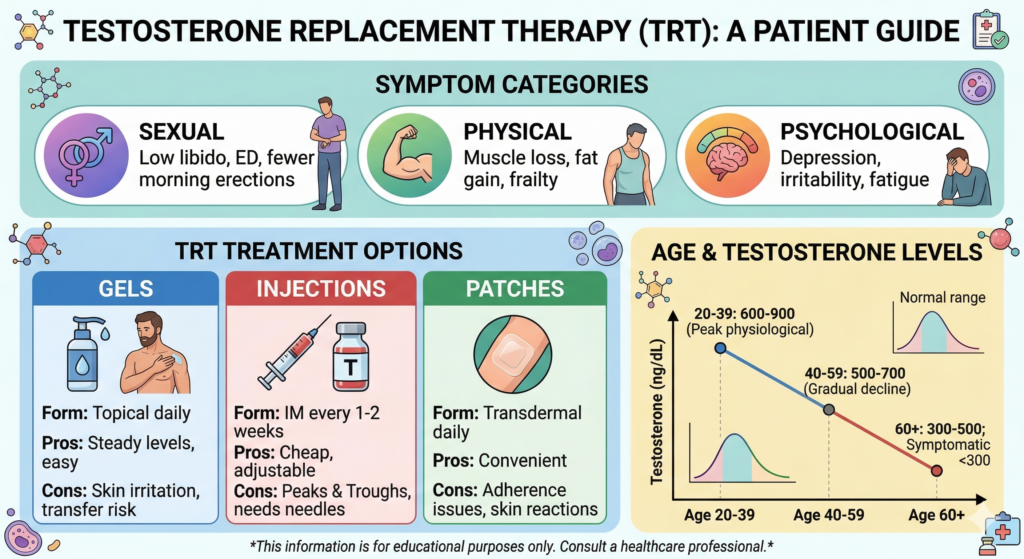
| Sexual | Low libido, Erectile Dysfunction (ED), lack of morning/spontaneous erections |
| Physical | Loss of muscle mass, increased body fat, physical frailty, or decreased strength |
| Psychological | Depressive mood, increased irritability, or fatigue |
How Is Andropause Diagnosed?
Andropause is mainly diagnosed by these 4 checks:
1. Symptom Check: Use questionnaires like AMS/ADAM for screening (low specificity).
2. Blood Tests: Morning total testosterone <300 ng/dL (10.4 nmol/L); repeat if borderline.
3. Free Testosterone: Measure if SHBG altered (obesity, age).
4. Additional Labs: LH/FSH to classify primary/secondary; PSA, prolactin if needed.
Note: Confirm symptoms + low levels twice.
What Are Andropause Treatment Options?
There are two main treatment options for andropause:
- Lifestyle First
- Weight loss, exercise (strength + cardio).
- Healthy diet, sleep, stress management.
2. Testosterone Replacement Therapy (TRT)
- Pellets
- Goal: Mid-normal young male levels.
| Treatment | Form | Pros | Cons |
| Pellets | Subcutaneous implants (every 3-6 months) | Long-lasting, convenient, provides consistent, physiological hormone levels | Minor surgical procedure required, difficult to adjust dose once placed |
| TRT Gels | Topical (Applied daily) | Provides steady hormone levels; non-invasive and easy to apply. | Risk of skin irritation; potential for “transfer” to others via skin contact. |
| Injections | Intramuscular (Every 1–2 weeks) | Cost-effective; dosage is easily adjustable by a provider. | Can cause “peaks and troughs” (hormonal swings); requires needles. |
| Patches | Transdermal | Convenient application; mimics natural daily rhythms. | Common skin reactions; patches may fall off (adherence issues). |
What are the Benefits of Andropause Treatments?
The top 3 benefits of andropause treatments are listed below:
- Improves libido, erections, mood, energy.
- Increases muscle/strength, bone density; cuts fat.
- Evidence: RCTs show body composition gains, sexual function boost.
What are the Risks and Contraindications of Andropause Treatments?
- Risks:
- Polycythemia (hematocrit >55%), prostate growth, sleep apnea worsening.
- Possible CVD/lipid changes (mixed data).
- Contraindications:
- Prostate/breast cancer, severe BPH (IPSS>19), untreated sleep apnea.
- Hematocrit >50%, uncontrolled heart failure.
How to Monitor TRT Steps?
There are 3 steps to monitor TRT:
1. Baseline: PSA, hematocrit, DRE.
2. 3-6 months: Testosterone, PSA, hematocrit.
3. Annually: Full checks; stop if no benefit in 3-6 months.
| Age Range | Avg Total Testosterone (ng/dL) | Clinical Note |
| 20–39 | 600–900 | Peak physiological levels. |
| 40–59 | 500–700 | Gradual natural decline begins. |
| 60+ | 300–500 | Levels <300 are often considered symptomatic. |
FAQs
What is andropause meaning simply?
Age-related low testosterone syndrome with symptoms.
What causes andropause?
Andropause is caused by 1% yearly testosterone drop post-30s. Obesity is also a factor.
Does TRT cure andropause?
No, it manages symptoms. TRT is not a full cure.
When to test for andropause?
Men >40 with symptoms like fatigue and low libido.
Is andropause reversible?
Yes, lifestyle/TRT improves; early intervention is best to reverse andropause.